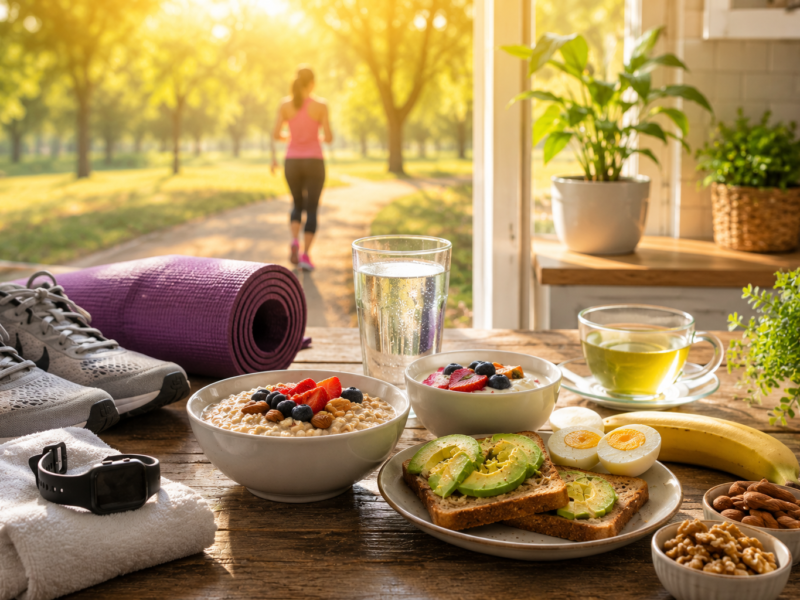
Starting a fitness journey can feel challenging, especially if you have never exercised regularly. Fortunately, you do not need an expensive gym membership or complicated equipment to improve your health. A beginner full body workout at home helps you build strength, improve endurance, and increase flexibility using simple bodyweight exercises.
The best part is that you can exercise whenever it fits your schedule. With consistency and proper technique, home workouts can become an effective way to improve your overall fitness and support a healthy lifestyle.
Why Choose a Full Body Workout?
A full body workout trains several major muscle groups during one session. Instead of focusing on only one area, you exercise your legs, chest, back, shoulders, arms, and core together.
As a result, beginners can improve overall fitness while learning proper movement patterns. In addition, full body workouts save time because you do not need separate sessions for different muscle groups.
Benefits of a Beginner Full Body Workout at Home
Following a regular workout routine offers many health benefits.
Some important advantages include:
- Builds overall body strength.
- Improves balance and coordination.
- Supports healthy weight management.
- Increases flexibility and mobility.
- Boosts daily energy levels.
- Improves posture.
- Strengthens muscles and bones.
- Requires little or no equipment.
Most importantly, exercising at home makes it easier to stay consistent.
Warm Up Before You Start
Always begin with a five to ten-minute warm-up. Warming up prepares your muscles and joints for movement while reducing the risk of injury.
Try these warm-up activities:
- March in place.
- Arm circles.
- Shoulder rolls.
- Leg swings.
- Gentle body twists.
- Light jogging in place.
Once your body feels warm, you can begin the workout.
Beginner Full Body Workout Routine
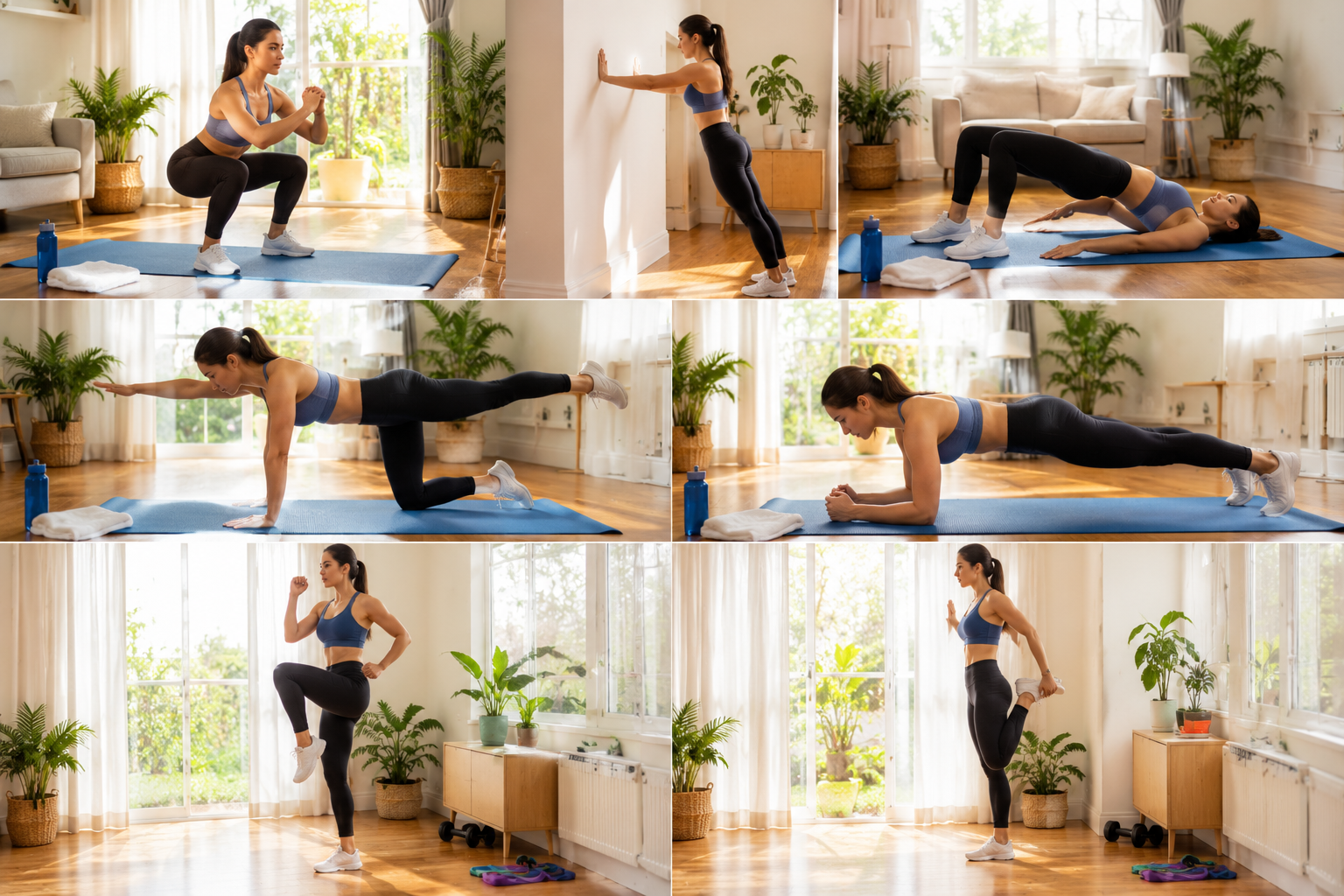
Perform each exercise slowly and focus on proper form. Rest for 30 to 60 seconds between exercises if needed.
1. Bodyweight Squats
Squats strengthen your legs, hips, and glutes.
How to perform:
- Stand with your feet shoulder-width apart.
- Lower your hips as if sitting in a chair.
- Keep your chest up.
- Push through your heels to stand again.
Complete 10 to 15 repetitions.
2. Wall Push-Ups
Wall push-ups are perfect for beginners because they reduce pressure on the upper body.
Steps:
- Stand facing a wall.
- Place your hands at shoulder height.
- Bend your elbows slowly.
- Push yourself back to the starting position.
Perform 10 to 15 repetitions.
3. Glute Bridges
Glute bridges strengthen the hips, lower back, and core.
Instructions:
- Lie on your back.
- Bend your knees.
- Place your feet flat on the floor.
- Lift your hips.
- Pause briefly.
- Lower slowly.
Complete 12 repetitions.
4. Bird Dog
This exercise improves balance and strengthens your core.
Steps:
- Begin on your hands and knees.
- Extend one arm and the opposite leg.
- Hold for a few seconds.
- Return slowly.
- Repeat on the opposite side.
Perform 10 repetitions per side.
5. Chair Step-Ups
Use a stable exercise step or low platform instead of a chair if available. If you use a chair, ensure it is sturdy and does not move.
Step up with one foot, bring the other foot up, then step down carefully.
Repeat 10 times on each leg.
6. Standing Knee Raises
Standing knee raises strengthen your abdominal muscles and improve balance.
Lift one knee toward your chest.
Lower it slowly.
Alternate legs for 30 to 45 seconds.
7. Plank
The plank strengthens your entire core.
Keep your elbows below your shoulders.
Maintain a straight line from your head to your heels.
Hold for 15 to 30 seconds.
Increase the time gradually as your strength improves.
Cool Down After Your Workout
Cooling down helps your body recover.
Spend five minutes stretching:
- Hamstrings
- Quadriceps
- Calves
- Chest
- Shoulders
- Back
Take slow, deep breaths while stretching.
Weekly Workout Schedule
A simple weekly routine helps beginners stay consistent.
Monday: Full body workout
Tuesday: Light walking
Wednesday: Full body workout
Thursday: Stretching or yoga
Friday: Full body workout
Saturday: Easy walk or cycling
Sunday: Rest and recovery
This schedule gives your muscles enough time to recover between sessions.
Tips for Better Results
Healthy habits improve your workout progress.
Follow these tips:
- Exercise regularly.
- Drink plenty of water.
- Eat balanced meals.
- Get enough sleep.
- Focus on correct technique.
- Increase repetitions gradually.
- Listen to your body.
- Stay patient with your progress.
Consistency always produces better results than doing very intense workouts for a short time.
Common Beginner Mistakes
Many beginners make simple mistakes that slow their progress.
Avoid these habits:
- Skipping the warm-up.
- Using poor exercise form.
- Exercising every day without rest.
- Comparing yourself with others.
- Expecting instant results.
- Holding your breath while exercising.
- Ignoring recovery days.
Instead, focus on improving a little every week.
Combine Exercise with Healthy Nutrition
Exercise alone is not enough for long-term fitness. Therefore, combine your workouts with nutritious meals.
Choose:
- Lean protein
- Whole grains
- Fresh vegetables
- Fruits
- Healthy fats
- Plenty of water
A balanced diet supports muscle recovery and provides energy for your workouts.
Safety Tips
Stop exercising immediately if you feel chest pain, severe dizziness, or unusual shortness of breath. Beginners should perform each movement slowly and within a comfortable range of motion.
If you have heart disease, joint problems, high blood pressure, or any medical condition, consult a qualified healthcare professional before starting a new exercise program.
Learn more about physical activity recommendations from the World Health Organization (WHO).