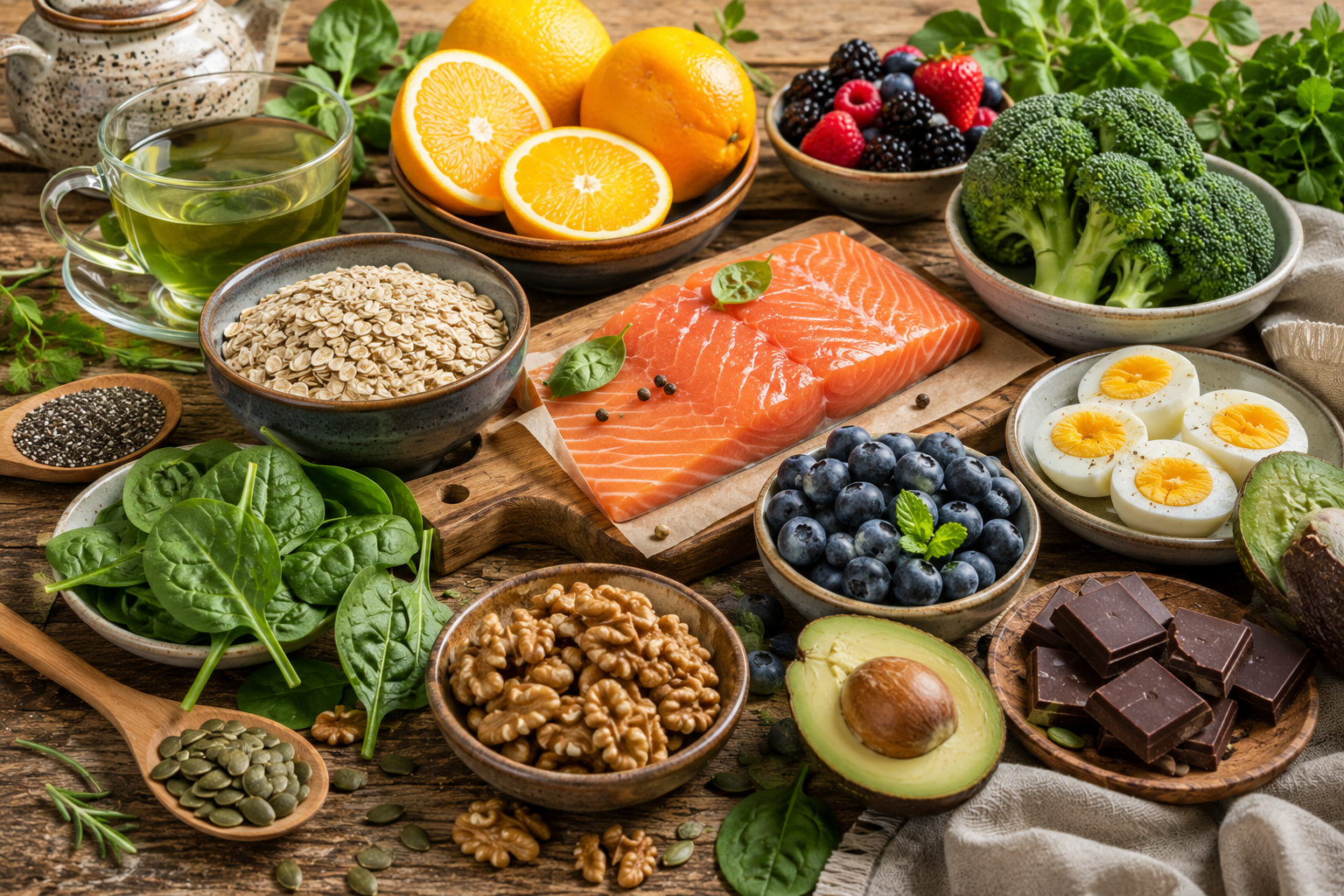
Your brain works every second of the day. It controls your thoughts, movements, emotions, and memory while helping you perform everyday tasks. Because the brain needs a constant supply of nutrients, your daily food choices play an important role in supporting overall cognitive health. Although no single food can guarantee perfect memory, eating a balanced diet provides the nutrients your brain needs to function properly.
Adding foods that improve brain health to your meals is a simple way to support long-term wellness. Combined with regular exercise, quality sleep, and mental activity, these nutritious foods may help maintain healthy brain function throughout life.
Why Nutrition Matters for Brain Health
The brain requires vitamins, minerals, healthy fats, protein, and antioxidants to perform efficiently. A nutritious diet helps supply these essential nutrients every day.
In addition, healthy eating supports overall body function, which also benefits the brain. Therefore, choosing nutrient-rich foods instead of highly processed meals is an excellent long-term habit.
Benefits of Foods That Improve Brain Health
Including foods that improve brain health in your diet offers several potential benefits.
These nutritious foods may help:
- Support normal brain function.
- Maintain memory and concentration.
- Provide antioxidants that protect cells.
- Support healthy blood circulation.
- Supply healthy fats for brain cells.
- Contribute to overall wellness.
- Help maintain steady energy levels.
Eating a variety of whole foods provides the greatest nutritional value.
1. Fatty Fish
Fatty fish such as salmon, sardines, and mackerel are rich in omega-3 fatty acids. These healthy fats are important for normal brain structure and function.
Aim to include fish in your weekly meal plan whenever possible.
2. Blueberries
Blueberries provide antioxidants that help protect body cells from oxidative stress.
Besides their nutritional value, they make an excellent addition to smoothies, yogurt, oatmeal, or fruit salads.
3. Walnuts
Walnuts contain healthy fats, antioxidants, and plant-based nutrients.
Enjoy a small handful as a snack or sprinkle chopped walnuts over oatmeal and salads.
4. Spinach
Spinach supplies folate, vitamin K, magnesium, and antioxidants.
You can easily add spinach to omelets, soups, smoothies, and sandwiches.
5. Eggs
Eggs provide high-quality protein along with nutrients such as choline, vitamin B12, and selenium.
A balanced breakfast that includes eggs supports energy throughout the day.
6. Broccoli
Broccoli contains fiber, vitamin C, vitamin K, and several beneficial plant compounds.
Steam or lightly cook broccoli to preserve its texture and nutritional value.
7. Pumpkin Seeds
Pumpkin seeds provide magnesium, zinc, iron, and healthy fats.
Add them to salads, yogurt, oatmeal, or homemade trail mix for extra nutrition.
8. Dark Chocolate
Dark chocolate with a high cocoa content contains antioxidants and beneficial plant compounds.
Choose moderate portions and varieties with less added sugar.
9. Avocados
Avocados contain healthy monounsaturated fats together with fiber and potassium.
Spread mashed avocado on whole-grain toast or add slices to salads and sandwiches.
10. Oranges
Oranges supply vitamin C, which supports overall health and helps protect cells from oxidative stress.
Fresh oranges also provide hydration and dietary fiber.
11. Oats
Oats release energy gradually because they contain complex carbohydrates and soluble fiber.
As a result, they provide a satisfying breakfast that supports steady energy throughout the morning.
12. Green Tea
Green tea contains natural plant compounds together with a moderate amount of caffeine.
Many people enjoy green tea as part of a balanced lifestyle because it provides a refreshing alternative to sugary beverages.
Easy Ways to Add Brain-Healthy Foods to Your Diet
Making healthy food choices does not have to be difficult.
Try these simple ideas:
- Eat oatmeal with blueberries for breakfast.
- Add spinach to smoothies.
- Snack on walnuts instead of chips.
- Include fish in weekly meals.
- Sprinkle pumpkin seeds on salads.
- Enjoy fresh fruit every day.
- Replace sugary snacks with oranges.
- Drink green tea without added sugar.
Small improvements become healthy habits over time.
Lifestyle Habits That Support Brain Health
Nutrition is only one part of maintaining a healthy brain.
You should also:
- Exercise regularly.
- Sleep seven to nine hours each night.
- Stay hydrated.
- Read books regularly.
- Solve puzzles or brain games.
- Spend time with family and friends.
- Manage stress effectively.
Together, these habits support both physical and mental well-being.
Foods to Limit
Some foods provide very little nutritional value when eaten in large amounts.
Try to reduce:
- Sugary drinks.
- Highly processed snacks.
- Excessive fast food.
- Refined sweets.
- Foods high in trans fats.
Instead, choose fresh, whole foods whenever possible.
Safety Considerations
No single food can prevent or treat memory disorders or neurological diseases. A balanced diet supports overall brain health, but it should not replace medical care.
If you have a medical condition that affects memory, concentration, or brain function, seek advice from a qualified healthcare professional.
Learn more about nutrition and brain health from the Harvard T.H. Chan School of Public Health – The Nutrition Source.