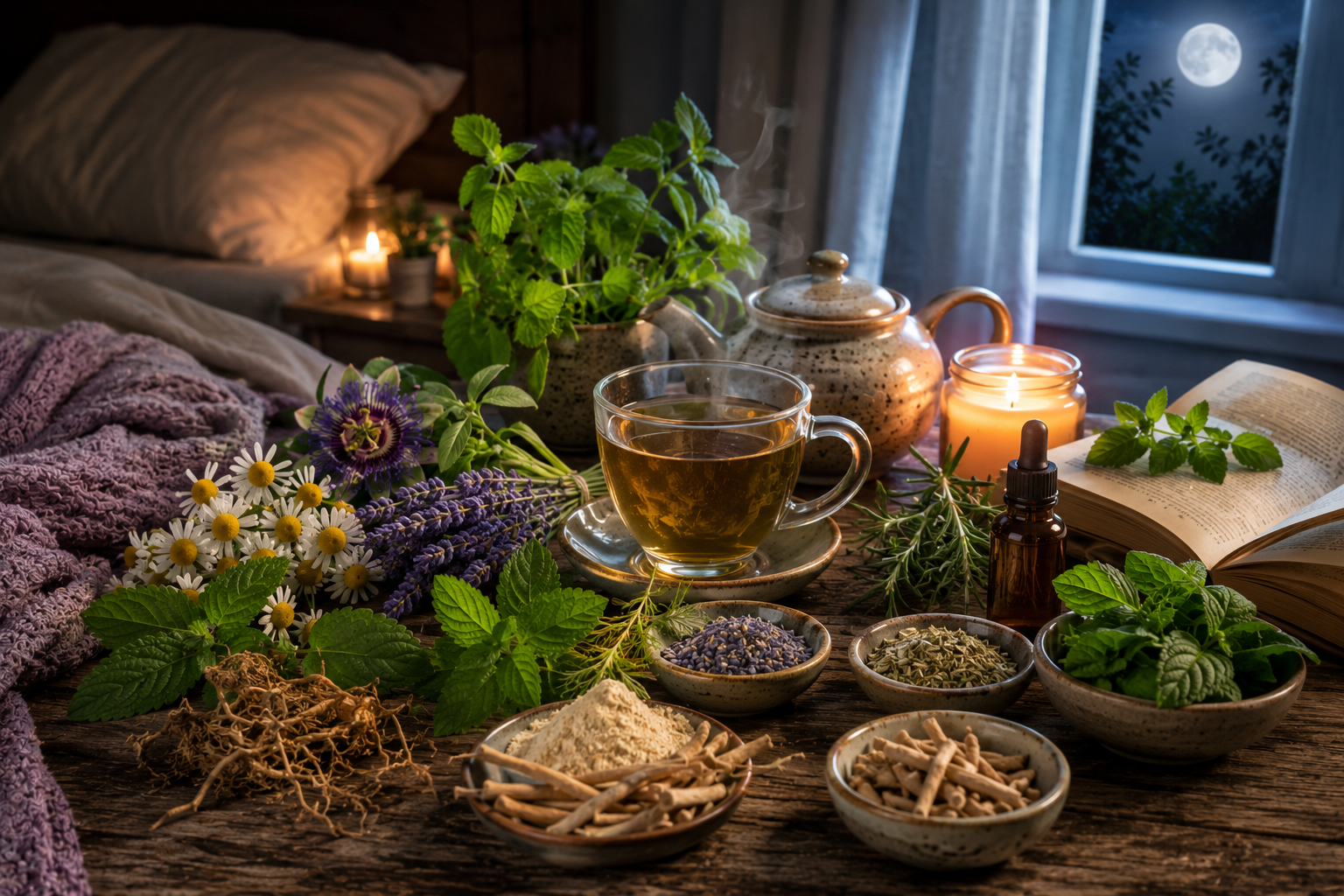
Getting enough quality sleep is essential for both physical and mental well-being. A good night’s rest helps your body recover, supports memory, improves mood, and prepares you for the day ahead. However, many people struggle with occasional sleeplessness because of stress, busy schedules, poor bedtime habits, or excessive screen time.
Fortunately, several natural herbs for better sleep have been used in traditional wellness practices for generations. Although herbs are not a substitute for medical treatment, they may support relaxation when combined with healthy sleep habits.
Why Quality Sleep Matters
Sleep is just as important as healthy eating and regular exercise. During sleep, your body repairs tissues, supports brain function, and restores energy levels.
In addition, good sleep helps maintain concentration, emotional well-being, and overall health. Therefore, creating a relaxing bedtime routine can make falling asleep easier.
Benefits of Natural Herbs for Better Sleep
Many herbal plants contain natural compounds that people have traditionally used to encourage relaxation.
Some potential benefits include:
- Promotes relaxation before bedtime.
- Supports a calming evening routine.
- Helps create healthy sleep habits.
- May reduce bedtime stress.
- Complements a balanced lifestyle.
- Provides caffeine-free bedtime beverages.
- Encourages restful evenings.
Remember that herbs work best alongside healthy daily habits.
1. Chamomile
Chamomile is one of the most popular herbs for bedtime tea. Its gentle floral flavor makes it a favorite evening beverage around the world.
For the best results, enjoy a warm cup of chamomile tea about 30 to 60 minutes before bedtime.
2. Lavender
Lavender is well known for its pleasant fragrance. Besides growing beautifully in home gardens, lavender flowers are commonly used in herbal teas, sachets, and aromatherapy.
Its calming scent makes it a popular addition to bedtime routines.
3. Lemon Balm
Lemon balm belongs to the mint family and has a refreshing lemon aroma.
In the evening, lemon balm tea offers a refreshing and calming drink before bedtime.Many people drink lemon balm tea during the evening because it creates a relaxing experience before sleep.
4. Valerian Root
Valerian root has been used in traditional herbal practices for many years.
It is commonly prepared as tea or found in herbal products designed for evening relaxation. Because valerian has a strong flavor, some people combine it with other herbs.
5. Passionflower
Passionflower is another herb traditionally associated with relaxation.
Herbal teas containing passionflower are often enjoyed before bedtime as part of a calming nighttime routine.
6. Holy Basil (Tulsi)
Holy basil, also known as Tulsi, has an important place in traditional herbal systems.
Additionally, Tulsi tea provides a refreshing flavor that many people enjoy before going to bed.
7. Peppermint
Peppermint is widely known for its cooling flavor and refreshing aroma.
Although many people drink peppermint tea after meals, others include it in their evening routine because it is naturally caffeine-free.
8. Ashwagandha
Ashwagandha is an herb commonly used in traditional Ayurvedic practices.
Before using it regularly, consult a healthcare professional, especially if you have existing medical conditions.
9. Magnolia Bark
Magnolia bark has a long history in traditional herbal medicine.
Today, it appears in various herbal preparations intended to support relaxation.
10. California Poppy
California poppy has been traditionally used in herbal wellness practices.
It is often included in herbal blends designed for evening use.
11. Rosemary
Rosemary is commonly known as a culinary herb. However, its pleasant aroma also makes it popular in relaxing herbal gardens and home environments.
12. Jasmine
Known for its delicate floral aroma, jasmine creates a calm and relaxing atmosphere before bedtime.
Many people also enjoy jasmine tea or keep fresh jasmine flowers nearby as part of a peaceful evening routine.
Healthy Bedtime Habits
Herbs alone cannot guarantee better sleep. Therefore, combine them with healthy bedtime routines.
Helpful habits include:
- Go to bed at the same time every night.
- Wake up at a consistent time.
- Keep your bedroom cool and quiet.
- Limit screen time before bed.
- Avoid caffeine late in the day.
- Exercise regularly.
- Eat a balanced diet.
- Practice relaxation techniques.
These habits often improve sleep quality over time.
Foods That Support Healthy Sleep
Several nutritious foods fit well into a healthy evening routine.
Healthy options include:
- Bananas
- Oats
- Almonds
- Walnuts
- Kiwi
- Low-fat yogurt
- Whole grains
Choose light evening meals instead of heavy, high-fat dinners whenever possible.
Common Habits That Affect Sleep
Unfortunately, several daily habits may interfere with restful sleep.
Try to avoid:
- Drinking coffee late in the evening.
- Using electronic devices before bed.
- Eating very large meals at night.
- Sleeping at different times each day.
- Taking long daytime naps.
Replacing these habits with healthier choices often improves sleep naturally.
Safety Considerations
Although many herbs have a long history of traditional use, they are not suitable for everyone. Some herbs may interact with prescription medications or may not be appropriate during pregnancy, breastfeeding, or certain medical conditions.
If you have ongoing sleep problems or regularly rely on sleep medications, consult a qualified healthcare professional before using herbal products.
Learn more about sleep health and healthy sleep habits from the Sleep Foundation.