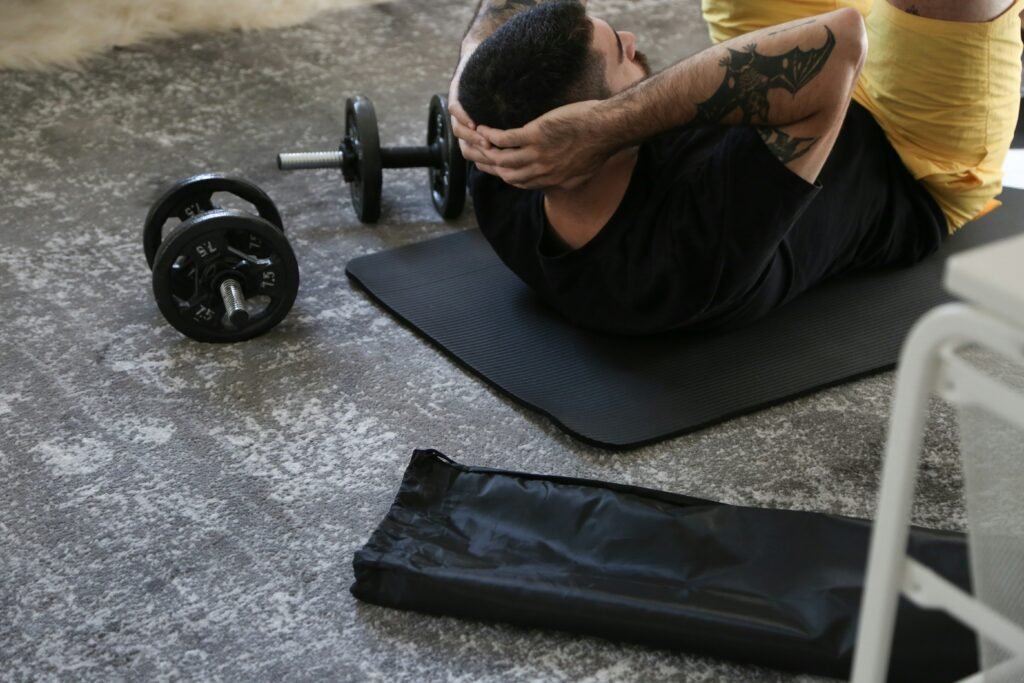
Introduction to Home Workouts
The concept of home workouts has gained significant traction in recent years, particularly among beginners who are interested in adopting a healthier lifestyle. This approach to fitness offers numerous advantages, making it an appealing option for those who may feel intimidated by traditional gym environments.
One of the primary benefits of home workouts is their convenience. Individuals can engage in a workout routine from the comfort of their own homes, eliminating the need to travel to a gym. This is especially advantageous for those with busy schedules or family commitments, as they can easily fit a session into their day without extensive planning.
Cost-effectiveness is another compelling reason to consider home workouts. Gym memberships can be a financial burden, particularly for beginners who may not be fully committed to a long-term routine. By utilizing bodyweight exercises and simple movements, individuals can create a comprehensive fitness plan without investing in expensive equipment. This accessibility allows a broader audience to embark on their fitness journey.
Furthermore, home workouts offer remarkable flexibility in terms of scheduling and routine. Beginners can tailor their exercise schedule to their personal preferences and energy levels, promoting a more enjoyable and sustainable approach to fitness. The ability to exercise at any time empowers individuals to be more consistent, an essential factor in achieving long-term fitness goals.
Establishing a workout routine at home allows beginners to build confidence and gradually increase their fitness levels. Through the use of various online resources and instructional videos, individuals can access a wealth of information to guide them in developing a program suited to their specific needs. In this way, home workouts present a viable opportunity for anyone looking to improve their health and wellness.
Understanding the Benefits of No-Equipment Workouts
No-equipment workouts have gained popularity due to their accessibility and adaptability for individuals at various fitness levels, especially beginners. These types of workouts provide a comprehensive way to enhance strength, endurance, and flexibility without the need for expensive machines or weights. By performing exercises that leverage body weight, one can effectively build muscle and improve overall fitness, making these routines especially beneficial for those just starting their fitness journey.
One of the primary advantages of no-equipment workouts is their versatility. Individuals can perform these exercises anywhere, whether at home, in a park, or while traveling. This flexibility encourages consistency, which is crucial for achieving fitness goals. Furthermore, workouts that require no equipment often focus on functional movements, which can help improve daily activities and reduce the likelihood of injuries. Such routines engage multiple muscle groups and promote better coordination and balance, enhancing overall body control.
Another significant benefit is that no-equipment workouts allow individuals to establish a strong foundation of fitness without incurring costs associated with gym memberships or purchasing equipment. Many effective exercises, including push-ups, squats, and lunges, utilize just body weight, making them highly accessible to beginners. Additionally, beginners can gradually progress at their own pace, leveraging online resources or instructional videos to ensure proper form and technique. This type of training can foster a sense of accomplishment as individuals witness their capability grow over time.
In conclusion, the advantages of no-equipment workouts extend far beyond mere convenience. They provide an effective way for beginners to enhance strength, endurance, and flexibility, all while minimizing injury risks and financial investments. With dedication and consistency, individuals can effectively achieve their fitness goals using just their bodies as a resource.
Getting Started: Setting Realistic Goals
When embarking on a home workout routine, it is vital for beginners to set realistic and achievable fitness goals. Establishing a clear set of objectives not only provides motivation but also helps track progress over time. The first step in this process involves assessing your current fitness level. Understanding where you stand physically will allow you to craft goals that are tailored to your abilities and limitations.
Next, it is essential to choose specific targets that resonate with your interests and lifestyle. These targets can include aspects like the duration of workouts, frequency per week, and variety in types of exercises. For instance, a beginner might aim for 20 minutes of bodyweight exercises three times a week, progressively increasing intensity and duration as one becomes more comfortable.
To structure these goals effectively, the SMART criteria can be utilized. Each goal should be Specific, Measurable, Achievable, Relevant, and Time-bound. Specific goals indicate precisely what you want to accomplish, such as completing a certain number of push-ups or squats. Measurable goals help in tracking progress quantitatively, like recording how many sessions are completed each week. Achievable goals should be realistic, taking into account your starting point. For instance, aiming for 30 minutes of exercise daily might not be feasible for a complete novice. Relevant goals ensure that they align with your overall fitness ambitions. Finally, Time-bound goals provide a deadline, encouraging commitment and urgency; an example would be working towards running continuously for five minutes within a month.
With these considerations in mind, you can create a solid foundation for your home workout routine. Setting realistic fitness goals helps maintain motivation and fosters a positive journey towards improved health and well-being.
Warm-Up: Preparing Your Body for Exercise
Warming up before starting any workout routine is essential for various reasons. Primarily, it helps to prepare your body for the physical demands of exercise. By engaging in appropriate warm-up activities, you can enhance circulation, increase muscle temperature, and improve the elasticity of joints and muscles, which reduces the risk of injury. This gradual transition from rest to exercise optimizes performance and sets the stage for an effective workout.
For beginners, effective warm-up exercises can be performed at home without any equipment. These exercises typically focus on dynamic stretching and mobility to activate the muscles and joints in a controlled manner. One fundamental warm-up exercise is marching in place; this simple movement elevates the heart rate and engages the lower body. Start by marching for about 1-2 minutes, gradually lifting your knees higher to increase intensity.
Another beneficial warm-up is arm circles. Stand tall, extend your arms to the sides, and make small circular motions, first in one direction and then in the opposite direction. This exercise effectively warms up the shoulder joints, which are critical for many upper body workouts.
The leg swings exercise is also highly effective. Stand next to a wall or any sturdy surface for support. Swing one leg forward and backward, keeping your posture straight; switch legs after 10-15 repetitions. This movement targets the hips and helps increase flexibility.
Incorporating these warm-up activities into your pre-exercise routine will ensure that your body is adequately prepared for the workout ahead. The benefits are multifold, including improved performance and reduced risk of injuries. Make it a habit to prioritize warm-ups for a more rewarding exercise experience.
Beginner-Friendly Bodyweight Exercises
Bodyweight exercises serve as a foundational aspect of home workouts, especially for beginners who may not have access to gym equipment. These exercises utilize one’s own body weight for resistance, thus making them highly effective and accessible. Here, we explore some essential bodyweight exercises that can be seamlessly incorporated into any beginner’s workout routine.
Squats are vital for building lower body strength, primarily targeting the quadriceps, hamstrings, and glutes. To perform a squat correctly, stand with your feet shoulder-width apart. Lower your body as if sitting back into a chair, ensuring that your knees do not extend beyond your toes. Keep your chest up and core engaged for stability. Beginners may use a chair for support or perform wall-supported squats to maintain balance.
Push-ups are an excellent exercise for enhancing upper body strength, specifically working the chest, shoulders, and triceps. Start in a high plank position, with your hands slightly wider than shoulder-width apart. Lower yourself towards the ground by bending your elbows while keeping your body in a straight line. If this is challenging, beginners can opt for knee push-ups or incline push-ups using a sturdy surface like a table or counter.
Lunges further strengthen the legs and improve balance. To execute a basic lunge, step forward with one leg while lowering your hips until both knees are bent at about 90-degree angles. Ensure that your front knee stays directly above your ankle. Variations include reverse lunges or lateral lunges for increased complexity.
Planks focus on core stability and strength. To perform a plank, position yourself on the floor, resting on your forearms and toes, keeping your body in a straight line. Hold this position while engaging your abdominal muscles. For beginners, starting with knee planks or side planks can make the exercise more manageable.
These exercises can be performed consecutively as part of a circuit or individually, depending on preference and fitness level. Exploring variations and modifications allows participants to progress safely while building strength and confidence in their home workout journey.
Creating a Balanced Routine: Full-Body Workouts
When embarking on a home workout routine, particularly for beginners, it is essential to establish a balanced regimen that engages all major muscle groups. Full-body workouts can serve as an effective foundation, providing you with the strength, cardiovascular fitness, and flexibility required for overall health. The primary objective is to create a workout that is not only challenging but also enjoyable, ensuring consistency in exercise habits.
A well-rounded full-body workout routine incorporates bodyweight exercises, which can be performed without any specialized equipment. This eliminates barriers to entry for those who might be intimidated by traditional gym settings or lack access to fitness resources. For an efficient full-body workout, consider including exercises such as push-ups, squats, lunges, planks, and jumping jacks. These movements stimulate various muscle groups while promoting cardiovascular health.
As a sample plan, beginners might aim to perform three to four sets of 8-12 repetitions for each exercise, with a focus on proper form. For example, start with push-ups to work on upper body strength, followed by bodyweight squats targeting the legs and glutes. Lunges can be incorporated next to improve stability and coordination. Following this, a plank can serve to strengthen the core, and jumping jacks can be included for a cardiovascular aspect of the workout.
Flexibility can also play a vital role in a beginner’s routine, so incorporating stretching exercises such as toe touches or arm circles at the beginning and end of the workout can enhance mobility and aid in recovery. Balancing strength, cardio, and flexibility within your home workout will yield comprehensive benefits and contribute to overall fitness progress.
Staying Motivated: Tips for Consistency
Maintaining motivation during a home workout routine can often be challenging, especially for beginners who may struggle with the absence of a structured environment. However, several strategies can aid in cultivating and sustaining the necessary discipline and enthusiasm.
First and foremost, tracking progress is crucial. Keeping a workout journal or utilizing fitness apps allows individuals to log their exercises, monitor improvements, and celebrate small victories. These records not only provide visible evidence of growth but also foster a sense of accomplishment, encouraging continued engagement with the workout routine.
Next, finding workout buddies can significantly enhance motivation levels. Exercising in the company of friends or family, even virtually, infuses an element of accountability. Additionally, partners can share tips, motivate each other, and transform the workout experience into an enjoyable social activity rather than a solitary task.
Creating a dedicated workout space is another essential factor in maintaining consistency. Designate an area in your home exclusively for exercise, whether it’s a corner of a room or a specific outdoor setting. This not only helps in establishing a habit but also mentally prepares one to transition from other daily activities to workout mode.
Finally, mixing up routines is vital to prevent monotony. Engaging in a variety of workouts, from bodyweight exercises to dance or yoga, keeps the experience fresh and exciting. This variation not only combats boredom but also challenges different muscle groups, enhancing overall fitness outcomes.
In conclusion, by implementing these strategies, individuals can effectively stay motivated and consistent in their home workout routines, fostering a long-term commitment to their fitness goals.
Cool Down: Importance and Techniques
The cool-down phase of any workout is a crucial component that often gets overlooked, especially in home workout routines for beginners without equipment. Engaging in this vital process helps to facilitate a smooth transition for the body from an active state back to rest. This gradual reduction in intensity is beneficial for various physiological reasons.
Primarily, cooling down aids in the prevention of dizziness and fainting, which can occur when the heart rate decreases abruptly. By allowing the body to return to its normal state gradually, individuals can also help to minimize muscle soreness and stiffness, ultimately enhancing recovery time. Additionally, a proper cool-down can promote mental relaxation, providing a moment to reflect on the workout and mentally prepare for the rest of the day.
Incorporating stretching techniques is essential during the cool-down period. Simple stretches such as reaching for the toes, gently rotating the neck, or performing shoulder rolls can significantly alleviate tension and improve flexibility. Moreover, light exercises like walking in place or slow side bends can help lower the heart rate, which is integral to the cooling process. Taking a few moments for deep, regulated breathing during these stretches can further contribute to relaxation, enhancing the overall benefits of the cool-down.
For beginners, it is recommended to spend at least 5 to 10 minutes cooling down. This time can be used effectively to engage in gentle movements that promote recovery. It is important not to rush through this stage; rather, approach it with the same mindfulness as the workout itself. Gradually working through these techniques can set the foundation for a more effective fitness journey without any equipment.
Conclusion and Next Steps
In summary, embarking on a home workout routine is an empowering choice for beginners seeking to improve their fitness levels without the need for expensive equipment or gym memberships. The convenience of exercising at home allows individuals to integrate physical activity into their daily lives easily. By dedicating a small block of time each day to workouts, beginners can gradually build strength, endurance, and overall well-being.
Throughout this blog, we discussed several key components crucial for beginners starting their home workouts. Emphasis was placed on establishing a daily routine, engaging in body-weight exercises, and maintaining a focus on form to prevent injuries. It is essential for newcomers to recognize that progress may be gradual, and patience is vital as the body adjusts to new physical demands.
For those ready to take the first steps, it is recommended to create a structured schedule that includes varied exercises to maintain motivation and prevent boredom. Begin with simple routines and progressively increase difficulty based on comfort and capability. Tracking progress can significantly enhance one’s commitment and provide a sense of accomplishment as goals are achieved.
For further education on home workouts and progression, many online resources are available, including fitness videos, apps, and community forums. These resources not only offer varied workout options but also connect beginners with others on similar journeys. Remember, the journey to fitness is personal, and every step taken – no matter how small – contributes to overall health and resilience. Embracing home workouts lays down a solid foundation for a healthier lifestyle.